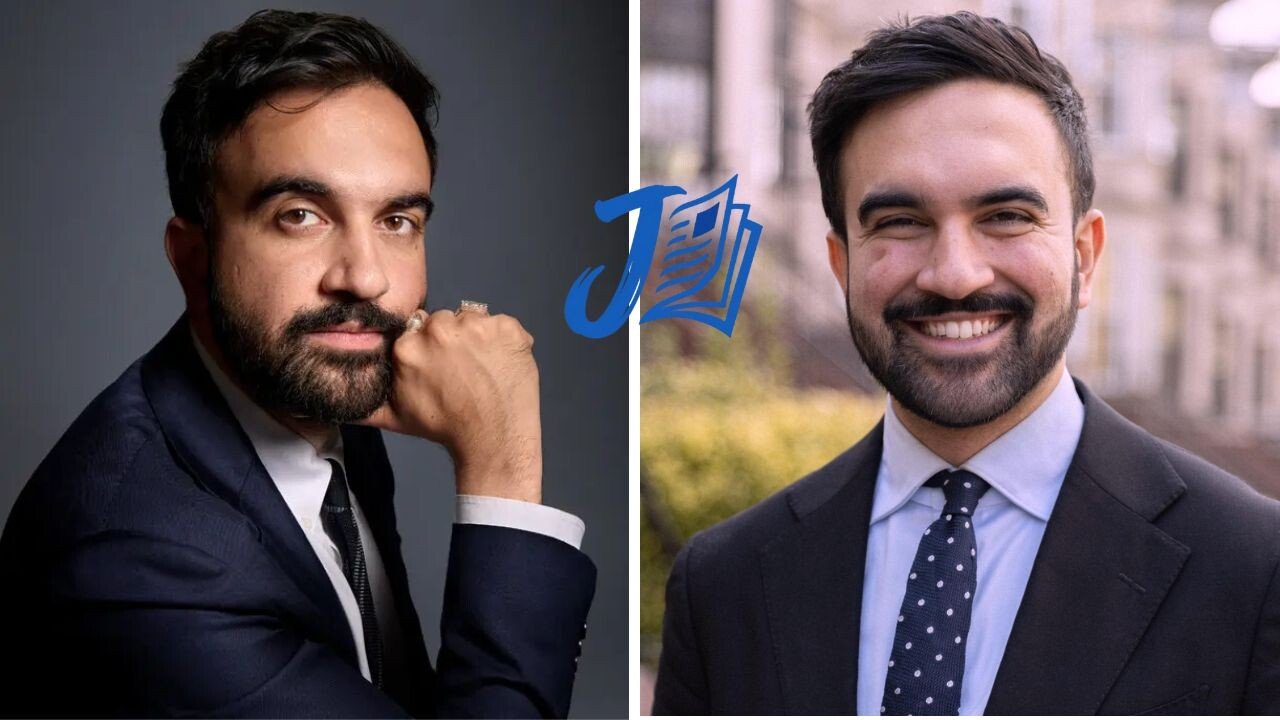
Zohran Mamdani moved from college studies and housing work in Queens into elected office before winning New York City’s 2025 mayoral election. A Bowdoin College graduate, he worked as a foreclosure-prevention housing counselor, won a New York State Assembly seat in 2020, and later built a mayoral campaign around affordability and the cost of living. He was sworn in as mayor on January 1, 2026.
| Field | Details |
|---|---|
| Full Name | Zohran Mamdani |
| Birthplace | Kampala, Uganda |
| Education | Bowdoin College |
| Field of Study | Africana studies; government minor |
| Citizenship | Naturalized U.S. citizen |
| Previous Elected Role | New York State Assembly, District 36 |
| Current Role | Mayor of New York City |
| Political Outlook | Self-described democratic socialist |
| Parents | Mahmood Mamdani and Mira Nair |
From Kampala to Growing Up in New York City
Mamdani was born in Kampala, Uganda, in 1991 to Indian parents Mahmood Mamdani and Mira Nair. He spent his childhood in Uganda and South Africa before his family moved to New York City when he was seven. His father later became a professor at Columbia University.
His schooling gave him experience in different parts of the city. He attended Bank Street School for Children and later the Bronx High School of Science. In a 2025 interview, Mamdani described New York as a place where people can inhabit several different social worlds at once, connecting that observation to his own education and upbringing.
That New York childhood shaped his later political identity. Although he was born outside the United States, he grew up in the city from elementary school and became a naturalized American citizen in 2018. His Ugandan birth and South Asian family background later became part of the public discussion surrounding his political rise.
Bowdoin College and the Foundations of Public Engagement
Mamdani attended Bowdoin College in Maine and graduated in 2014. Bowdoin records show that he majored in Africana studies and minored in government. He also worked on the staff of the student newspaper, The Bowdoin Orient.
His college years also included political organizing. A later TIME profile documented his involvement in establishing a campus chapter of Students for Justice in Palestine. That activity formed part of a broader period of progressive organizing that preceded his work in New York campaigns and housing issues.
The combination of Africana studies, government coursework, student journalism, and organizing did not lead immediately to elected office. After college, he worked on political campaigns before moving into a housing role that put him in direct contact with New Yorkers under financial pressure.
Housing Work Before Elected Office
After Bowdoin, Mamdani worked as a foreclosure-prevention housing counselor in Queens. Reporting on his pre-political career identifies Chhaya Community Development Corporation as the organization where he spent more than a year helping homeowners at risk of losing their homes.
His work involved assisting homeowners facing foreclosure-related problems.
That experience became part of the platform he carried into electoral politics. When he ran for the New York State Assembly in 2020, housing affordability was already a central issue in his campaign. His transition from counseling individual homeowners to seeking legislative office marked a shift from direct assistance toward attempting to change public policy.
Entering the New York State Assembly
Mamdani challenged incumbent Assemblymember Aravella Simotas in the 2020 Democratic primary for New York State Assembly District 36. Official New York election records agree that Mamdani received 8,410 votes, but published state records differ by one vote on Simotas’s total, listing either 7,986 or 7,987. He then appeared as the Democratic candidate in the November general election and took office the following year.
District 36 included Astoria, Ditmars-Steinway, and Astoria Heights in Queens. Bowdoin records note that Mamdani was reelected in 2022 and again in 2024, giving him several years of state legislative experience before his mayoral campaign.
Transportation affordability became one of his visible areas of work in Albany. He advocated for a fare-free bus pilot that eventually placed one free route in each borough. In 2023, he described the proposal as a way to provide economic relief to working-class New Yorkers while improving access to public transportation.
In a 2025 TIME interview, Mamdani argued that confidence in democracy also depends on government’s ability to address material challenges in working-class people’s lives. His legislative record and public campaigning increasingly centered on housing costs, transportation, and the wider affordability pressures facing city residents.
The Campaign for New York City Mayor
Mamdani announced his mayoral candidacy in October 2024. At the beginning of the race, he was far less widely known than several of his competitors, but his campaign concentrated heavily on the cost of living. His proposals included faster, fare-free buses; a rent freeze for rent-stabilized apartments; expanded child care; more affordable housing; and city-operated grocery stores intended to reduce food costs.
His campaign also used short-form digital communication and extensive in-person organizing. In an interview with TIME, he explained that he wanted policy commitments to be stated directly enough that people could understand how they would affect daily life. His campaign connected that approach to rent, transportation costs, child care, and other expenses rather than relying primarily on abstract political language.
The Democratic primary became the campaign’s first major electoral breakthrough. Ranked-choice results released in July 2025 confirmed that Mamdani defeated former Governor Andrew Cuomo by 12 percentage points in the final round.
He then faced Cuomo, running as an independent, and Republican Curtis Sliwa in the November 4 general election. Associated Press election results recorded more than 1.1 million votes for Mamdani and a majority of the vote, making him the winner of the mayoral race.
Becoming New York City Mayor
Mamdani was sworn in on January 1, 2026. His election made him New York City’s first Muslim mayor, its first mayor born in Africa, its first of South Asian heritage, and its youngest mayor in more than a century.
A minor historical numbering issue surrounds the office. The current Mayor’s Office identifies him as the 112th mayor of New York City, while some earlier institutional coverage called him the 111th. The city itself has acknowledged that historical mayoral numbering has been inconsistent. Mamdani even referred to the ambiguity in his inaugural address before stating more simply that he was the city’s mayor.
In his inaugural remarks, Mamdani said his administration would answer to all New Yorkers and that he would govern according to the democratic-socialist principles on which he had been elected.
By August 2026, the Mayor’s Office was documenting an administration working across housing, transportation, small-business support, education, and consumer issues. Recent official announcements have included investments in commercial corridors and transportation initiatives, placing affordability-related policy at the center of his first year in office.
Beliefs and Public-Service Priorities in His Own Words
Mamdani has repeatedly described affordability as the organizing idea behind his approach to city government. During the mayoral campaign, he said successful politics should let people recognize their own struggles in a candidate’s program and clearly understand how a proposed policy would affect their lives.
Transportation provides one example of that approach. While serving in the Assembly, he presented fare-free buses as economic relief for working New Yorkers rather than only as a transportation reform. The five-borough fare-free bus pilot preceded his decision to make fare-free buses part of his larger mayoral platform.
He has also said politics should remain physically connected to the public. In 2025, he described the kind of politics he wanted to practice as being conducted in person, in public, and with people. That preference was visible in a campaign built around street conversations, neighborhood visits, public transportation, volunteers, and direct digital communication.
Once elected, he carried his democratic-socialist identification into office rather than distancing himself from it. At his inauguration, he said he had been elected on that basis and intended to govern accordingly, while making affordability and working-class concerns central to his administration’s public message.
Family Background, Citizenship, and Personal Profile
Mamdani is the son of Mahmood Mamdani and Mira Nair. His father is a longtime scholar and professor at Columbia University. His parents have Indian family roots, while Mamdani himself was born in Uganda and spent part of his early childhood outside the United States before settling in New York.
He became a U.S. citizen in 2018. That documented naturalization is an important part of his biography because his immigration status became a subject of political attacks during his mayoral rise despite his established citizenship. Reliable reporting consistently identifies him as a naturalized American citizen.
Public Presence and Communication
Communication became a major feature of Mamdani’s rise from a relatively little-known state legislator to a citywide candidate. His campaign relied on direct policy explanations, neighborhood campaigning, volunteer outreach, and videos focused on specific cost-of-living concerns. AP reporting described the campaign as digitally savvy and strongly focused on issues residents encountered in everyday life.
His campaign website remains active, while his speeches, executive actions, and administration announcements are now published through the New York City Mayor’s Office.
Before taking office, Mamdani described a political approach centered on direct, in-person engagement with the public, an emphasis that was also visible throughout his mayoral campaign.
From Bowdoin to City Hall
Affordability provides the clearest connection between Mamdani’s earlier public work and his role at City Hall. Housing costs, transportation, and economic pressure on working New Yorkers remained prominent themes as he moved from state office into a citywide campaign.
As mayor, he now has to translate those priorities into city policy. His verified record establishes a political rise built through housing work, legislative service, electoral organizing, and a campaign that ultimately brought him to City Hall.
You can also read: Aidan Gallagher Environmental Work With UNEP and Trees with Aidan.