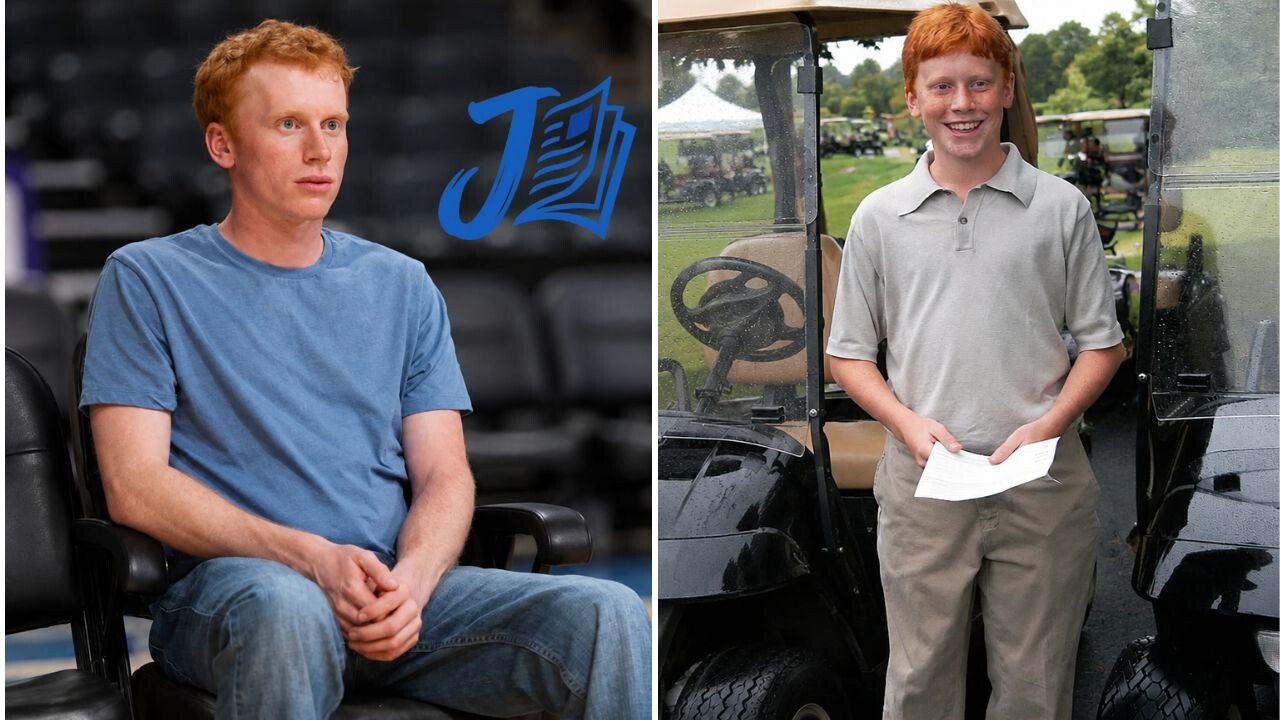
Reed Cross Howard built his public work around competitive golf, technical training, and instruction. His documented record begins with college competition and later includes mini-tour events, a major swing rebuild, online teaching, and podcast work.
The development of Steadhead grew directly from a problem Howard noticed in his own technique. After struggling with excessive head movement, he created a visual-reference training aid intended to help golfers maintain a more stable position. His first-person accounts provide useful detail about the experimentation, practice habits, and competitive pressure behind that project.
| Field | Details |
|---|---|
| Full name | Reed Cross Howard |
| Hometown | Banksville, New York |
| Education | Heritage Academy graduate; attended Pepperdine; studied history at USCB |
| Listed height | 5 feet 10 inches |
| Profession | Professional golfer and instructor |
| Training project | Steadhead |
His College Golf Foundation
Howard was born on April 12, 1987, to Ron and Cheryl Howard. An official college athletic record identified Banksville, New York, as his hometown.
He graduated from Heritage Academy and attended Pepperdine University before joining the men’s golf program at the University of South Carolina Beaufort. USCB listed him as a senior majoring in history. The same roster recorded his height as 5 feet 10 inches, though that measurement dates from his college years.
Howard was part of the first men’s golf team at USCB during the 2007–08 school year. His fall 2008 record covered 16 rounds and 1,197 total strokes, producing a scoring average of 74.8. The listed results included appearances at the USC Aiken Invitational, Webber International Tournament, Charleston Southern Fall Invitational, Wilmington Island Invitational, Reed Jones Intercollegiate, and J. Lindeberg Sand Shark Classic.
USCB also reported that he qualified for the U.S. Amateur Championship at Pinehurst during summer 2008. The university profile does not provide his qualifying score or later championship result, but it establishes that his competitive experience extended beyond the college schedule.
Rebuilding His Technique for Professional Competition
Howard later identified himself publicly as a professional golfer. In a first-person account published on October 23, 2017, he described a long attempt to build a single-plane swing after studying the techniques of highly regarded ball strikers.
According to his account, he spent approximately four years experimenting without achieving the position or accuracy he wanted. He tried to reproduce elements used by several accomplished players, but the changes did not produce a reliable competitive swing. He eventually abandoned that attempt and returned to conventional coaching.
His direction changed after he encountered Todd Graves’s approach. Howard contacted Graves and traveled to Oklahoma City for instruction. He wrote that the initial session helped him understand why his earlier attempts had failed, but applying the technical changes required a much longer process.
The rebuilding period lasted approximately a year and a half. Howard explained that he and Graves were working toward a similar technical destination, but his natural movement differed from his coach’s. Some adjustments came quickly, while others required sustained practice.
By late 2017, he described the reconstructed swing as functional and reported making about half of his recent tournament cuts. He was still working through periods of strong ball striking followed by inconsistent stretches. His stated goal was to extend the reliable periods while continuing to compete in smaller professional events.
In early 2018, Howard wrote that he planned to play primarily in Golden State events before attempting Canadian Tour qualifying school. These first-person updates document his professional ambitions during that period, though current ranking records do not establish ongoing major-tour participation.
How Steadhead Developed From a Training Problem
Steadhead emerged from Howard’s effort to correct excessive movement during his swing. He noticed that his head moved significantly downward and backward during the downswing, affecting accuracy from the tee and on approach shots.
His comparison with other players led him to focus on how effectively they rotated around a stable center. Howard reasoned that unnecessary head movement could make hand-eye coordination more difficult. When he could not find an existing product that addressed the problem in the way he wanted, he developed his own training aid.
Steadhead clips to the brim of a golfer’s hat and extends a small visual marker into the player’s peripheral vision. The golfer continues looking at the ball while using the marker as a reference for detecting unwanted head movement. The device was intended to provide immediate visual feedback that would otherwise be difficult to obtain during a swing.
Howard discussed the product’s background and design in a Golf Unfiltered podcast episode published on November 12, 2018. The episode identified him as a mini-tour player and the inventor of Steadhead.
A GOLF.com review published on January 10, 2020, independently documented the product and its connection to his technical problem. The reviewer described the aid as particularly relevant for players who sway, lift, or move excessively during their swings. No dependable current information is available about the product’s sales, revenue, or present company structure.
His Approach to Training and Competitive Pressure
Howard’s 2018 writing provided a direct account of how he prepared for professional events. Before returning to competition after a holiday break, he planned practice rounds at the tournament venue and identified a specific movement in his trail foot that required attention.
He also distinguished between the pressure of casual rounds and tournament play. A strong score carried greater financial and professional consequences in competition, which could make him tighten up or become too intense.
To reduce that tension, Howard said he sometimes started a light conversation with another competitor. He also described using a simple, decisive shot to interrupt excessive thinking. The purpose was to help his body and attention return to a less restricted state.
His approach centered on treating each shot, round, and tournament as part of a continuing process. He believed competitive comfort could develop only through repeated tournament experience. These comments describe his routine and thinking in 2018 rather than a verified current method.
Howard also used performance measurements when evaluating technical changes. In an April 2018 account, he compared swing-speed and ball-speed figures recorded before and after rebuilding his technique. He reported that the new method maintained or improved his speed while giving him more control. Those measurements came from his own account and were not accompanied by a separately published testing report.
Golf Instruction and Podcast Work
Howard expanded his public work beyond competition through digital instruction. His attributed YouTube channel presented training material, drills, practice sessions, and livestream content. In the channel description, he identified training, teaching, and competing as the main focus of his work.
The instructional material allowed him to explain technical movements that he had addressed in his own development. His Steadhead demonstrations connected the product with drills focused on head stability and putting.
In 2023, Howard served as a co-host on Golf Digest’s Golf IQ podcast. The program used short episodes to discuss common strategic and technical problems faced by recreational players. Topics involving approach shots, chipping, putting practice, distance training, and course strategy appeared during his period as co-host.
Golf Digest described him as a TPI-certified trainer. His podcast role placed his technical knowledge within a broader instructional format alongside Golf Digest editor Luke Kerr-Dineen. Available verified information does not establish whether Howard remains involved with the program or how frequently he currently publishes instructional content.
His Confirmed Family Background
Reed is the youngest of Ron and Cheryl Howard’s four children and their only son. His three older sisters are Bryce Dallas Howard and twins Jocelyn Carlyle Howard and Paige Carlyle Howard.
In a 2020 family interview, he recalled moving frequently during childhood when his father’s professional commitments required travel. Reed credited his mother with finding temporary homes and arranging new schools so the family could stay together.
He also remembered his father remaining actively involved at home despite a demanding work schedule. These comments document Reed’s own childhood perspective without establishing broader conclusions about every period of the family’s life.
Reputable reporting identifies Ashley Howard as his wife. Ron Howard publicly announced the April 26, 2019 birth of their daughter, Aspen Leigh Howard, the following day. Reliable sources do not establish an exact wedding date or venue.
His Current Documented Golf Status
The PGA TOUR continues to maintain an official player profile for Reed Howard. When checked in August 2026, the profile listed his country as the United States and showed zero career wins within that database. Several other biographical fields remained blank.
The Official World Golf Ranking listed him as unranked, with no current counting events and a historical best position of No. 1780. These records do not establish that he has retired, but they also do not support describing him as a current major-tour competitor.
A PEOPLE profile updated on April 13, 2026, continued to identify him as a professional golfer and linked his publicly attributed Instagram and YouTube accounts. Family members have also linked or tagged both accounts.
No reliable update published between 2024 and August 2026 documented a new tournament result, major professional transition, or new training project. His current public record therefore rests mainly on established golf profiles, instructional accounts, and previously documented professional work.
Reed Cross Howard’s Documented Path in Golf
Reed Cross Howard’s verified golf history includes Heritage Academy, Pepperdine, and USCB, where he competed as a member of the university’s first men’s team and recorded a 74.8 average during fall 2008. He later pursued professional competition while undertaking a lengthy technical rebuild with Todd Graves.
That training process became the foundation for Steadhead, an aid created to address excessive head movement through a simple visual reference. Howard subsequently extended his work into online instruction and Golf IQ podcast discussions.
His official profiles remain accessible, but current records do not show recent counting events or major-tour results. The documented picture is therefore one of a college competitor who pursued professional golf, developed a training product from his own technical challenge, and shared his experience through instruction and golf media.
You can also read: Tosca Musk Built Passionflix Around Independence and Purpose.
1 Comment