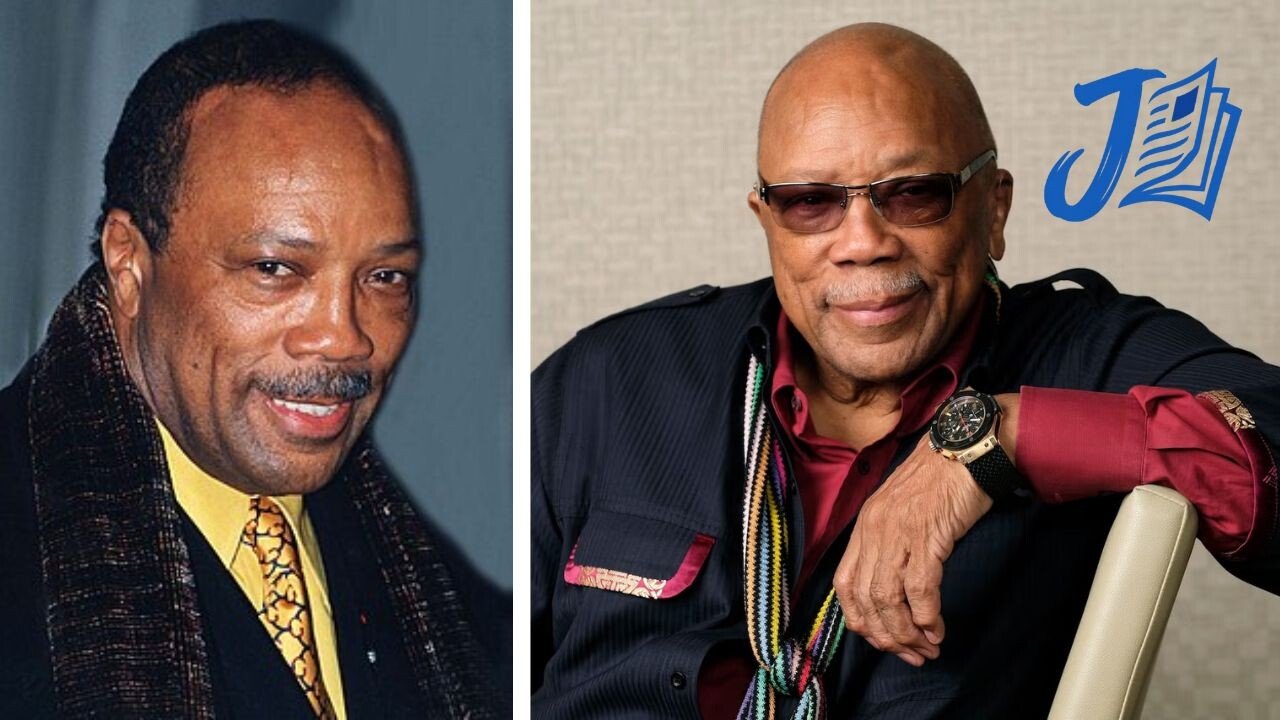
Quincy Jones spoke publicly about fatherhood, personal responsibility, health changes, discrimination, and the value of using public recognition to help other people. Born in Chicago on March 14, 1933, he grew up with difficult family circumstances and later reflected openly on how those experiences shaped his understanding of parents, children, and personal growth.
Beyond his professional life, Jones maintained documented relationships with humanitarian organizations and supported causes connected with disability advocacy, education, health, and people facing financial hardship. He died at his Bel Air home on November 3, 2024, at age 91.
| Field | Details |
|---|---|
| Full Name | Quincy Delight Jones Jr. |
| Birthplace | Chicago, Illinois |
| Nationality | American |
| Children | Seven |
| Father’s Occupation | Skilled carpenter |
| Health | Publicly confirmed that he had type 2 diabetes |
| Advocacy Role | International spokesperson for the Global Down Syndrome Foundation |
| Public Service | Served 20 years on the Jazz Foundation of America’s Honorary Founders Board |
Childhood Experiences Shaped His View of Family
Jones described a childhood marked by major disruption. In interviews with the American Academy of Achievement, he recalled that his mother was placed in an institution when he was approximately five to seven years old. His father then carried much of the responsibility for supporting the family.
He described his father as a skilled carpenter who worked hard during difficult economic conditions. Jones later returned to those memories when discussing his own responsibilities as a parent.
His childhood also exposed him to violence and instability. Rather than presenting those experiences as simple background, Jones spoke about how he tried to cope with painful memories without letting bitterness control his later choices. He said he learned to redirect difficult experiences into constructive activity.
His brother Lloyd was another important part of his early family story. Jones said Lloyd died from renal cell carcinoma in 1998 and referred to him as his “only real brother.” Later reporting also identified Richard Jones as a surviving brother and Theresa Frank and Margie Jay as surviving sisters, although the reviewed material did not fully establish the exact biological or step-family relationships among everyone named.
Quincy Jones Reflected Openly on Fatherhood
Jones was the father of seven children: Jolie Jones Levine, Rachel Jones, Martina Jones, Quincy Jones III, Kidada Jones, Rashida Jones, and Kenya Kinski-Jones.
His public comments about parenting were unusually reflective. In a Father’s Day message in 2018, he wrote that he came to understand the importance of a parent’s role more deeply as he grew older. He also expressed gratitude for the effort his own father had made to provide for the family during the Depression era.
Jones did not present parenthood as something that could only be judged by the past. He said people could continue working on their relationships with their children even after earlier mistakes or missed opportunities. That idea became one of his clearest public statements about family responsibility.
One of his final public messages also centered on fatherhood. Around daughter Martina’s birthday on November 1, 2024, he expressed pride in being her father and shared his affection for her. He died two days later.
Public reporting after his death also identified grandchildren including Isaiah Jones Koenig, Quincy Renzo Delight Jones IV, and Nea Jones. The available reporting named those family members without establishing that they represented a complete list of his grandchildren.
He Saw Public Recognition as a Way to Help Others
Jones repeatedly connected public prominence with responsibility. In comments later cited by the Associated Press, he said one of the most useful aspects of being well known was having a platform to help other people.
Associated Press reporting linked Jones’s public advocacy to education, HIV/AIDS-related causes, and assistance for people living in poverty. AP reported that his involvement in social causes became more pronounced after he attended Martin Luther King Jr.’s funeral in 1968.
His own comments about discrimination also help explain how he viewed public action. Jones spoke directly about experiences of racism and the anger those experiences created. He said he tried to direct that anger toward useful work rather than letting it remain only frustration.
For Jones, helping others was not presented simply as a charitable side activity. His comments framed public visibility as an opportunity to contribute beyond personal success.
His Work With the Global Down Syndrome Foundation
A clearly documented part of Jones’s advocacy involved the Global Down Syndrome Foundation. In 2011, the organization named him an international spokesperson.
The foundation focuses on research, medical care, education, and advocacy for people with Down syndrome. Jones’s role placed him publicly alongside an organization working to improve support and opportunities for people with the condition and their families.
The available organizational record confirms his spokesperson role, although it does not establish the exact length of his service or provide a complete record of every activity he performed for the foundation.
Two Decades With the Jazz Foundation of America
Jones also had a long-term connection with the Jazz Foundation of America. After his death, the organization stated that he had served on its Honorary Founders Board for 20 years.
The organization said Jones served on its Honorary Founders Board for 20 years, establishing a documented long-term relationship with the foundation.
In 2023, the foundation named the Quincy Jones Love and Peace Humanitarian Award in his honor. The award became another documented link between his public identity and humanitarian service.
Personal Growth Influenced How He Approached Problems
Jones often discussed how he handled difficulty. In a 2018 GQ interview, he said anger alone did little for him. Instead, he preferred to see a difficult situation as a problem or puzzle he could work through.
That attitude also appeared in his comments about racial discrimination. He acknowledged the anger those experiences caused while describing an effort to channel it into constructive action.
International travel also contributed to a shift in perspective. Jones told the American Academy of Achievement that traveling abroad broadened his understanding of people, conflict, and society. He also said he developed a habit of learning basic words from languages he encountered. His comments suggest an interest in languages and learning, though they do not claim he was formally fluent in many of them.
Jones also spoke in spiritual terms. In his GQ interview, he referred to a “higher power” and said he believed what people put into the world eventually comes back to them. His statement reflects a personal spiritual outlook without naming a specific denomination.
Even in his 80s, he described himself as highly curious and resistant to the idea of mentally retiring. He told GQ that his curiosity remained especially strong and that he still wanted to keep learning.
Major Health Changes Affected His Later Habits
Jones openly discussed several serious health experiences. He said he had type 2 diabetes and later revealed that he experienced a diabetic coma in 2015.
In a 2019 Instagram post, he explained that the event led to major changes in his habits. On medical advice, he stopped drinking alcohol and said he lost about 50 pounds. He also reported feeling mentally and physically better after those changes.
A separate serious health episode had occurred decades earlier. Associated Press reporting documented a life-threatening brain aneurysm in 1974 and his recovery after surgery involving blood vessels in the brain.
His later routine included deliberate efforts to keep his mind active. During a 2018 GQ interview, Jones described an unusual schedule, often waking around 4 or 5 p.m. and staying active through the night. He also said he used Sudoku and other mental challenges to keep his brain active.
Those details describe specific periods in his later life rather than a permanent routine that applies to every stage of adulthood.
His Later Years and Final Public Messages
Jones spent his later years in Bel Air, Los Angeles. He died at his home there on November 3, 2024, with family around him, according to reporting confirmed by his publicist and family.
A Los Angeles County death certificate later identified pancreatic cancer as the cause of death. The information became public through Los Angeles Times reporting on November 13, 2024.
His Bel Air residence remained part of the public record after his death. In May 2025, The Wall Street Journal reported that the property had been listed for $59.995 million. The approximately 25,000-square-foot, five-bedroom home had been custom-built for Jones in the early 2000s. His daughter, Rashida, said he built the home from the ground up.
The listing figure represented an asking price for the property. It did not establish Jones’s personal net worth, estate value, or the eventual sale price.
Quincy Jones Left a Public Record Centered on Family and Service
The verified record of Quincy Jones’s later public statements goes well beyond professional achievement. He spoke candidly about becoming more thoughtful about fatherhood, appreciating his own father’s sacrifices, learning from painful experiences, and continuing to improve relationships with children.
His documented public service included serving as an international spokesperson for the Global Down Syndrome Foundation and spending two decades on the Jazz Foundation of America’s Honorary Founders Board. Reputable reporting also connected him with education, HIV/AIDS-related causes, and assistance for people living in poverty.
Jones also described public recognition in practical terms: as a platform that could be used to help others. That belief, combined with his direct reflections on family responsibility and personal growth, provides a clear and well-documented picture of the values he chose to discuss publicly.
You can also read: Taylor Sheridan From Texas Ranch Roots to Four Sixes Leadership.