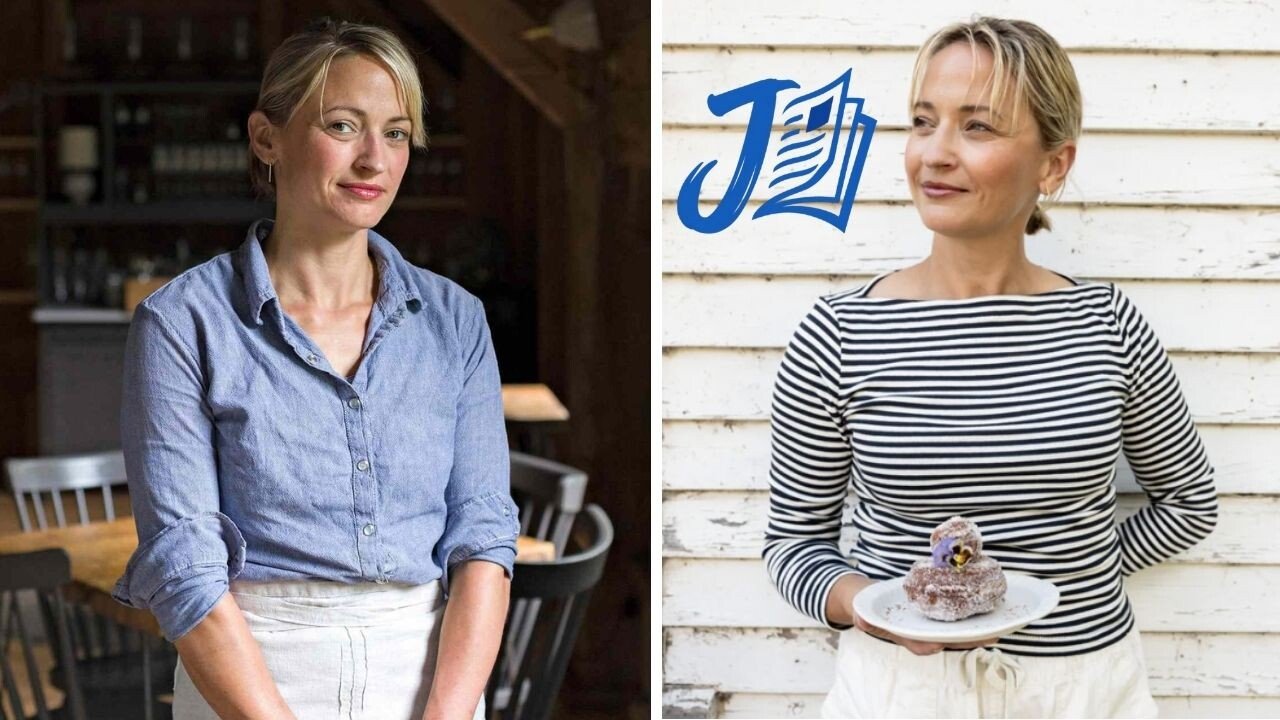
Erin French is the chef and owner of The Lost Kitchen in Freedom, Maine. She developed her cooking skills through early diner work, cookbooks, local ingredients, and practical experience instead of attending culinary school.
Her path to the restaurant’s current form was not direct. Private suppers led to an earlier restaurant in Belfast, followed by a difficult period in which she lost that business. A renovated Airstream helped her return to cooking before she established The Lost Kitchen in her hometown. The restaurant later became known for seasonal menus, an extended dining format, and its unusual postcard reservation process.
| Field | Details |
|---|---|
| Full name | Erin French |
| Profession | Self-taught chef, restaurateur, and author |
| Main project | The Lost Kitchen |
| Role | Chef and owner |
| Location | Freedom, Maine |
| Culinary training | Practical experience and independent study |
| Culinary approach | Seasonal dishes using available Maine ingredients |
| Published work | Cookbooks and a memoir |
| Recognition | Four James Beard Foundation chef-award semifinalist listings |
Learning to Cook in Rural Maine
French grew up in Freedom and learned about restaurant work through her father’s diner. Reliable profiles disagree on whether she began working there at 12 or 14, but they consistently place her in the diner at a young age. The experience gave her early exposure to the rhythm of a working kitchen and the direct connection between preparing food and serving customers.
She did not attend culinary school. Instead, she studied cookbooks, worked with the ingredients available around her, and developed her skills through repeated practice.
Her understanding of Maine ingredients also changed with time. French told Condé Nast Traveler in 2024 that she once wanted to leave the state but later recognized the value of its farmland, seafood, produce, and changing seasons. Those resources became central to how she approached cooking at The Lost Kitchen.
Turning Private Suppers Into a Restaurant
Around age 30, French began opening her Belfast apartment to approximately 24 guests for private, multi-course suppers. She described the project as an informal operation that allowed her to prepare food that felt personal rather than follow a predetermined restaurant category.
As interest grew, the private suppers developed into the first established version of The Lost Kitchen. An official James Beard Foundation record shows that she represented the Belfast restaurant at its “Modern Maine Farmhouse” dinner on May 17, 2013. The event menu emphasized Maine produce, seafood, cheeses, and other regional ingredients.
This institutional record places French and the original restaurant within a recognized professional setting before the later Freedom location became widely known. It also documents that her locally focused approach was already established during the Belfast phase of her career.
Rebuilding Through an Airstream Kitchen
French has directly discussed the personal and professional crisis that followed the success of her first restaurant. In her memoir and interviews, she described addiction, family and custody difficulties, and the loss of the original business around 2013. These experiences are part of her own public account rather than details inferred from outside reporting.
After losing the restaurant, she returned to Freedom and worked on a 1965 Airstream. She removed its damaged interior and converted the trailer into a mobile kitchen. Traveling dinners allowed her to continue cooking without depending on a permanent restaurant space.
The Airstream also changed how she viewed her professional identity. In a 2024 interview, French said it taught her that a dining room’s walls did not define her ability to cook. She could prepare meals in a field, on a beach, or at a picnic table and still bring the same purpose to the work.
French said in a 2024 interview that the Freedom location opened on July 4, 2014. The Cut also used 2014, while Food & Wine reported 2017, leaving a published discrepancy.
Creating a Distinctive Maine Dining Experience
The Lost Kitchen’s menus are shaped by what is fresh and available rather than by a fixed list of dishes. French described the regional supply as broader than familiar Maine stereotypes, pointing to produce, flowers, seafood, potatoes, berries, and other seasonal ingredients.
In her 2024 Condé Nast Traveler interview, she described an evening that lasted approximately five hours and included around 14 courses. Guests did not know the menu in advance because the kitchen changed it according to the day’s ingredients. Capacity and course totals have varied across published accounts, so those figures describe the restaurant as French presented it during the 2024 season.
Hospitality is as important to her as the individual dishes. French told The Maine Magazine that making something for another person and seeing the response gave her a sense of doing something meaningful. She has spoken about food as a practical way to care for people and create connection around a table.
Why Reservations Are Requested by Postcard
The postcard system began as a response to demand that the original booking process could no longer manage. French explained that reservations were once handled by telephone, pencil, and paper. When interest increased sharply, she looked for a slower method rather than moving the process online.
Potential guests were asked to mail postcards, which could then be drawn and matched with available tables. French described it as a lottery based on chance rather than status or the speed of an online booking attempt.
In 2024, she estimated that The Lost Kitchen received approximately 60,000 postcards for about 500 tables during a season. Those numbers belong to the period she was discussing and are not confirmed totals for 2026. The system became one of the clearest examples of how she adapted the restaurant to heavy demand while preserving its limited scale.
Choosing Character Over Rapid Expansion
Despite interest in The Lost Kitchen, French has resisted opening multiple versions of the main restaurant. In a 2023 interview with The Cut, she said its existing size matched what she wanted and that expanding the concept too aggressively could remove its distinctive qualities.
That choice did not prevent the Freedom property from developing in other ways. The official website now presents Little Lost Kitchen as a casual counter-service operation offering drinks, sandwiches, and sweet items for outdoor dining. It also lists three eco-cabins beside the mill pond.
During the disruption that began in 2020, French also created an online farmers’ market. The Maine Magazine reported that the project was intended to support her team and the local farmers with whom the restaurant worked. It was a practical community and business response rather than a separately documented advocacy organization.
By August 2026, the official site continued to display Little Lost Kitchen service information and cabin bookings. The wider property had therefore expanded its food and hospitality offerings without becoming a chain of main restaurants.
Cookbooks and Professional Recognition
French’s first cookbook, The Lost Kitchen, was published by Penguin Random House on May 9, 2017. It brought together seasonal Maine recipes and the regional approach associated with her restaurant. The James Beard Foundation later listed it as a 2018 nominee in the American cookbook category.
Her memoir, Finding Freedom, followed on April 6, 2021. The book addressed her upbringing, professional development, personal struggles, and the rebuilding of her culinary work. Macmillan identifies it as a New York Times bestseller.
She returned to cooking and hospitality with Big Heart Little Stove, published on October 31, 2023. The publisher describes it as an instant No. 1 New York Times bestseller and presents it as a collection of recipes, serving ideas, and details intended to create more thoughtful meals at home.
The James Beard Foundation’s official archive also lists French as a chef-award semifinalist in 2016, 2018, 2019, and 2020. These were semifinalist recognitions rather than chef-award victories.
Professional Growth and Changing Priorities
French has spoken openly about the uncertainty created by her lack of formal training. In The Cut, she said she once felt ashamed that she did not possess conventional techniques or credentials. With experience, she came to see independent learning as a way to develop her own instincts rather than follow someone else’s definition of food.
She also described self-doubt as part of evaluating and improving her work. Early in the restaurant’s development, she regularly read customer-review platforms and tried to separate useful criticism from comments that offered no practical value. She later stopped reading those sites.
The workload carried personal costs. French described restaurant service days lasting around 17 hours during the 2023 season. She also acknowledged missing parts of her son’s childhood because work dominated her attention. By that interview, she said Sundays had become dedicated family days.
Her routine at the time included tending animals and gathering edible flowers before arriving at the restaurant. These details describe a particular working season rather than a permanent daily schedule, but they illustrate how the property, ingredients, and service preparation were connected.
Seize the Supper and the 2026 Book Tour
French’s next confirmed publishing project is Seize the Supper, the third volume in The Lost Kitchen cookbook series. Macmillan and the official restaurant website list October 13, 2026 as its scheduled publication date.
The publisher describes the book as a collection of complete seasonal meals designed around main dishes, salads, sides, and desserts. Its stated focus continues French’s established interest in accessible cooking, gathering around a table, and using food to create meaningful occasions.
Celadon Books has also announced a supporting tour scheduled from October 11 through October 24, 2026. Planned stops include Portland, New York, Westport, Boston, Houston, Austin, Seattle, San Francisco, San Diego, Chicago, and St. Louis. As of August 29, 2026, the book and tour remained scheduled future developments.
A Self-Taught Career Rooted in Freedom
French’s public work centers on independent culinary learning, seasonal Maine ingredients, and a deliberate choice to preserve The Lost Kitchen’s limited scale. Her books and related hospitality offerings extend that approach beyond the main dining room.